

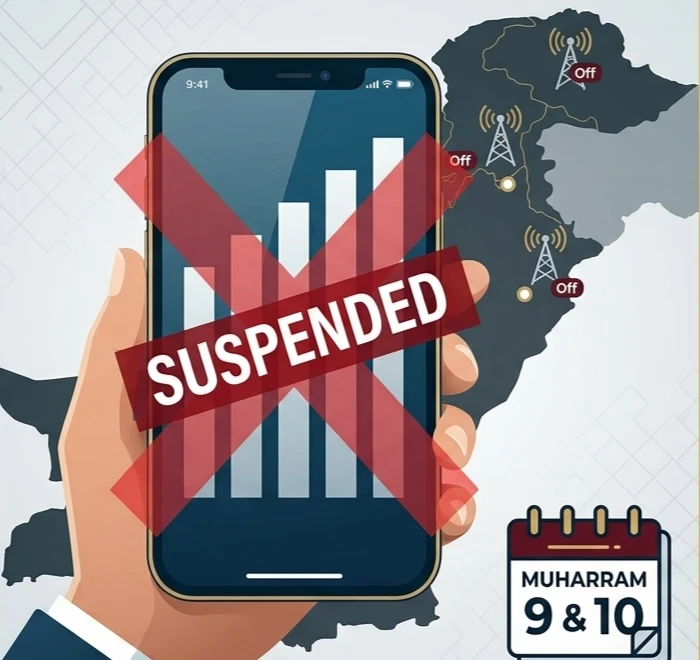
Every year, the month of Muharram brings deep spiritual reflection and massive public gatherings across Pakistan. To protect the millions of citizens participating in these holy processions, the federal and provincial governments put strict safety measures in place. A central part of this plan involves pausing cellular networks in areas flagged as high-risk.
The Ministry of Interior, working closely with the Pakistan Telecommunication Authority (PTA), has finalized a massive security framework for the 9th and 10th of Muharram. If you live in a major urban hub or a designated sensitive area, you are highly likely to face temporary network blackouts. This comprehensive guide outlines the exact regions, cities, and services impacted so you can plan your days safely.
Why Cellular Services Face Temporary Restrictions
The practice of suspending mobile signals during major public events is a standard safety protocol in Pakistan. Security agencies analyze local data and threat assessments to determine which neighborhoods require immediate precautionary steps. Law enforcement authorities note that cellular signals can sometimes be manipulated to cause security breaches or spread panic.
By freezing mobile signals along the routes of mourning processions and around key Imambargahs, security forces create a safe environment. These temporary blackouts are done out of an abundance of caution. The primary goal is to maintain law and order, safeguard public lives, and ensure that traditional observances pass peacefully.
National Suspension Overview
While the federal government coordinates the overall security roadmap, local administrations handle the actual network cut-offs. The restrictions do not apply uniformly to the entire country. Instead, they target specific zones based on local security needs.
| Province | General Status for Muharram 9 & 10 | Primary Focus Areas |
|---|---|---|
| Punjab | Highly targeted partial suspensions | Main procession routes, crowded city centers |
| Sindh | Sector-specific network cuts | Karachi hubs, major internal districts |
| Khyber Pakhtunkhwa | Complete shutdowns in high-risk zones | Sensitive border and central districts |
| Balochistan | Early active suspensions | Capital city and surrounding sensitive sectors |
Province-Wise Breakdown of Affected Cities
The severity of the mobile network freeze varies greatly depending on your location. Below is the detailed list of areas facing partial or total network closures.
Punjab
The Punjab government has mobilized a massive security operation to monitor hundreds of processions. Mobile signals will be limited primarily around active procession paths.
- Lahore: Expect network closures around the old walled city, Lower Mall, and near prominent central Imambargahs.
- Rawalpindi: Areas near Raja Bazaar, Saddar, and paths leading to central mourning spots will experience total signal freezes during peak hours.
- Faisalabad & Jhang: Multiple neighborhoods in these central districts are marked as highly sensitive, meaning local mobile towers will go offline.
- Multan & Bahawalpur: Cellular services will face disruptions close to main bazaars and routes hosting major gatherings.
Sindh
The Sindh Home Department has focused its attention on major urban zones where massive crowds gather for Ashura.
- Karachi: Tower closures will hit areas like MA Jinnah Road, Saddar, Christie Lines, and neighborhoods surrounding the central procession routes.
- Hyderabad: Latifabad and old city areas will face rolling cellular cuts during the day.
- Sukkur & Khairpur: Local authorities have ordered network pauses during peak mourning hours near central urban junctions.
Khyber Pakhtunkhwa (KP)
Khyber Pakhtunkhwa has categorized a significant number of its processing sites as highly sensitive. Security officials are using strict communication lockdowns to keep the peace.
- Peshawar: The provincial capital will see wide-scale mobile data and voice network shutdowns, especially inside the old city limits.
- Kohat & Hangu: These districts are under tight surveillance, with complete cellular shutdowns expected throughout both holy days.
- Dera Ismail Khan: Strategic locations along the procession routes will lose mobile connectivity from morning until late evening.
Balochistan
Balochistan started its safety protocols early in the week, testing and applying network freezes in key zones.
- Quetta: The provincial capital is under a strict security blanket. Mobile services will be completely unavailable across most city sectors during the main Ashura events.
- Other Districts: Specific areas close to highway hubs and local Imambargahs will also see targeted tower shutdowns.
What Services Face Disruption?
A common question among citizens is whether the internet shutdown affects everything or just mobile phones. The network restrictions focus heavily on mobile technology rather than fixed infrastructure.
Mobile Voice Calls and SMS
Standard cellular networks (including 2G and 3G voice capabilities) will be completely offline in the selected sensitive zones. You will not be able to make normal phone calls or send text messages if you are near a procession route.
Mobile Mobile Data (4G/5G)
Mobile internet packages from all major networks (including Jazz, Zong, Telenor, and Ufone) will stop working in affected areas. This means apps that rely on mobile data will fail to load or refresh.
Fixed-Line Broadband Internet
Regular home and office Wi-Fi networks that run on fiber-optic cables or fixed copper wires (like PTCL, StormFiber, or Nayatel) generally remain unaffected. If your internet comes from a physical wire into your house, you should face no issues.
Timings and Phased Restoration
Mobile networks do not shut down for the entire 48 hours of Muharram 9 and 10. Instead, the local home departments use a timed, phased approach.
Typically, signals start dropping around 8:00 AM as the morning processions begin to gather. The communication freeze usually lasts throughout the afternoon and evening. Once the main processions reach their destinations and conclude safely, law enforcement agencies give a clearance signal to the PTA.
Networks are generally restored sector by sector, usually between 10:00 PM and midnight on both days.
Practical Action Plan for Citizens
Navigating a temporary communication blackout requires a bit of advanced planning. Here are some simple, practical steps to keep you and your family connected:
- Download Offline Maps: If you must travel across the city, download Google Maps for your area ahead of time. Ride-hailing apps and live GPS navigation will not work on mobile data.
- Set Up Meeting Points: Let your family members know exactly where you are going and when you expect to return. Agree on a safe physical meeting spot in case you get separated.
- Keep Cash on Hand: Do not rely on digital wallets or mobile banking apps while out in the city. ATMs near procession routes may also lose connectivity, so withdraw necessary cash early.
- Use Fixed Wi-Fi for Work: If you run an online business or need to study, plan to stay in an area with a stable broadband Wi-Fi connection.
Frequently Asked Questions (FAQs)
1. Will the mobile network shutdown affect the entire country at once?
No. The suspension is highly targeted. Only specific cities and designated sensitive districts along the main procession routes will experience signal losses. If you are far away from these active zones, your phone should work normally.
2. Can I use WhatsApp or social media during the suspension?
You can use WhatsApp, Facebook, and other digital communication tools only if you are connected to a fixed broadband Wi-Fi connection. If you are relying on mobile data (4G/5G), these apps will not function in the restricted areas.
3. Are emergency services still available when networks are down?
Local landlines and fixed communication networks remain fully active. If you face an emergency, look for a landline connection to contact local police, traffic wardens, or medical services. Security personnel on the ground are also equipped with independent radio channels to help citizens.
4. When will mobile services return to normal completely?
Services are usually restored progressively late in the evening on the 10th of Muharram, once the final public gatherings conclude safely. By the morning following Ashura, all cellular networks across Pakistan return to their standard operational status.

